

Hello Interactors,
Who wants or needs another year-end wrap up? You do, of course!
I looked at the top four essays you opened most this year and see what amounts to one argument told three ways.
Our “shared reality” is getting fuzzier. This is less because of any single lie and more because how we decide what’s true together is weakening.
When reality becomes contestable, power swoops in…fast. It can arrive through seemingly mundane zoning or “innovation zones” — privatization that doesn’t advertise themselves as governance.
All of it shows up through interactions on the street. It comes in the form of a city that increasingly works better for packages than for people.
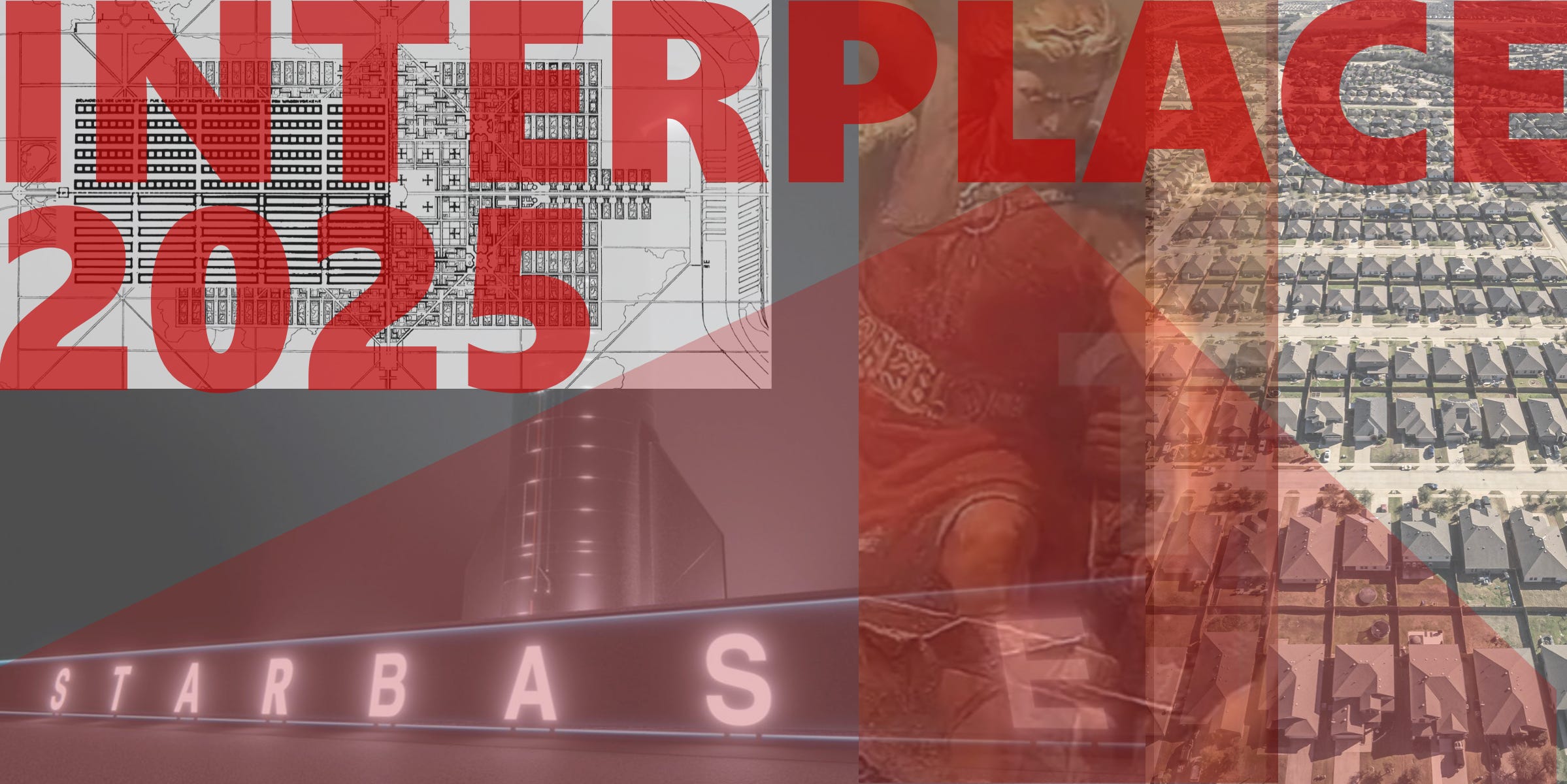
Let me take you through the top four as a kind of three-part overlapping translucent arc blending sensemaking with sovereignty and street life.
SENSEMAKING: SHARED STANDARDS AND SOFTENED SIGNAL
I’ve stopped thinking of misinformation as a content problem alone. The top essay’s recurring question wasn’t “how do we debunk some claim?” but “what happens when the shared machinery of shared knowledge breaks down?”
It seems,
“Digital platforms don’t just spread misinformation; they shape belief systems, reinforcing global echo chambers.”1
If that’s true, then the crisis isn’t just that falsehoods circulate. It’s that belief formation itself becomes it’s own environment. It becomes something you breathe, not something you choose in discrete moments. And once belief formation becomes this ambient, “fact-checking” starts to resemble pest control. You can swat at annoying individual examples but the conditions that generate them remain intact.
To find my own grounding I turned to pragmatism and 19th-century American philosopher Charles Sanders Peirce. This was not so much just an academic flag to wave, but as a usable framing.
“Peirce didn’t see truth as something fixed or final but as a process.”2
This shifts the goal of myth busting from winning to learning. It treats truth as something we approach through inquiry, self-correction, and a willingness to revise…together. I came to view fallibilism, the idea that human knowledge and beliefs are inherently uncertain and open to error no matter how strong the evidence, not as weakness, but as civic muscle to train.
I ended up thinking less about the lone “critical thinker” and more about the social production of belief. Like social psychologist Brian Lowery’s point that identity is “socially constructed — shaped by interactions, cultural narratives, and institutions” helped me see post-truth the same way. Belief systems live between us, not just inside us. That’s why debunking so often misfires. It treats belief like a detachable error instead of part of a relational interaction.
Peirce’s approach is procedural. Truth comes from “consensus reached by a community of inquirers,” strengthened through collective reasoning and self-correction. In this version of shared realty truth isn’t merely a set of facts. It’s a public utility. But when platforms “shape belief systems, reinforcing global echo chambers,” the shared sensemaking commons becomes easier to game. When a sensemaking pubic utility becomes privatized, gamed, or degraded, every opportunity downstream becomes easier to capture and/or exploit.
SOVEREIGNTY: SCARE STORIES AND SHADOW GOVERNANCE
When sensemaking frays, people search for certainty. That’s not a moral failing but a human response to drift. And drift is where opportunists do their best work. Back in the day, when sailboats lost wind, they’d bob and drift like a cork. This was called ‘being in irons’ because enemy ships would take advantage of the situation and fire cannonballs at the hull, filling it with iron.
The political equivalent of being “in irons” is a stalled public, luffing in confusion. We collectively become easy targets for anyone who can find and seize the wind by naming the threat and steering the story.
“By defining threats and controlling the narrative, leaders turn uncertainty into urgency, making repression feel not only justified but necessary.”
This is the part of politics that isn’t really about left or right. It’s about the choreography of fear. It’s about manufacturing the emergency, positioning yourself as the only credible antidote, and then treat dissent as recklessness.
“The state stands as fear’s fierce enforcer, embedding oppression in order and power in place.”
The story becomes spatial. Narrative doesn’t just persuade. It can reorganize where people can go, how they’re policed, and which communities get turned into symbols of danger…or opportunity.
But fear doesn’t only justify the barricade. It also produces permission for “exceptions,” carve-outs, and special arrangements that don’t look like crackdowns at all. Sometimes sovereignty doesn’t arrive with riot gear. Sometimes it arrives as a “housing deal,” a fast-tracked zoning change, a development district with deferred taxes, or a campus that runs on private shuttles and subsidized utilities.
A more extreme example can be found in South Texas and Musk’s Starbase. This is not like Vandenberg, where regulation still exists, but “Starbase, Texas, where the law doesn’t resist — it assists.” What looks like a town is, in practice, “a launchpad…for a new form of privatized sovereignty.”
“SpaceX controls the housing, the workforce, and now, the electorate.” Add zoning powers and taxing authority, and you end up with tools usually reserved for public government. It’s modern day secession.
Once you see it that way, the word “secession” stops sounding dramatic and starts sounding descriptive:
“They don’t announce themselves as secessions — but they function that way.”3
I think about Starbase whenever I hear a project pitched as “just development.” Sometimes it is. And sometimes it’s a jurisdictional carve-out dressed up as progress. The company builds the roads, controls the data, sets the rules, and then we act surprised when the “town” behaves like a private regime. Your own town may more like this than you know.
What makes this kind of capture durable is that it can hide inside normal administrative nouns like incorporation, annexation, zoning, or special ‘improvement’ districts. It doesn’t always resemble typical government, which is precisely why it works. Creating economic uncertainty within municipalities puts them ‘in irons’ and that’s when power swoops in…fast.
When reality is unstable, power gains permission — sometimes by force, sometimes by paperwork. Either way, a new kind of soft sovereignty emerges. And not just on paper. It shows up as everyday interfaces like badge-entry gates, private roads, controlled “public” space, and logistics corridors. These are places that appear public and open right up until you try to use them.
STREET LIFE: PLACE AS INTERFACE
Changes in sovereignty mostly happen one block at a time.
Not just in the headline-grabbing way but in the everyday way the platform economy remakes the city’s priorities. The same techno-libertarian impulse that treats Texas regulation as friction and jurisdiction as an engineering constraint shows up at street level as consolidation. Corporate actors elbow into vulnerable communities making bigger decisions, faster, and farther from the people who live with the consequences.
It changes what gets built, what gets removed, what gets subsidized, and what gets quietly reclassified as “infrastructure” rather than “community.” And once those decisions route through logistics timelines and platform incentives, the city’s purpose starts to tilt from being a place you inhabit to a system that serves you at a distance.
“From a lived city to a delivered one.”4
Yes, there’s a scale-and-efficiency case to be made for certain kinds of infrastructure. But then it leads to a reality planners, mayors, and residents all need to consider:
“You can optimize flow — and still degrade life.”5
You see this when a logistics-first city produces companion forms. Not only warehouses and data centers, but neighborhoods that “synchronize” with platform life — key-fob lobbies, amenity decks, app-mediated access, and ground floors that often feel like decorative promises with Amazon lockers. Interaction with people isn’t the goal, efficiency is.
What makes this moment feel so disorienting is that the city isn’t being rebuilt from scratch. It’s being re-scripted in place. The inherited order still sits there in concrete and code — street grids, zoning categories, frontage rules, parking minimums, financing templates — while the stories that once justified them are thinning out.
The forms remain legible, even familiar, but they no longer reliably tell you what kind of life they’re organizing. You can feel the mismatch between yesterday’s spatial grammar trying to host today’s platform logics, climate stresses, and institutional exhaustion. The result is a kind of regime lag where we get structure without consensus and continuity without clarity.
“Spatial logic lingers physically but loses meaning conceptually.”6
This is when street life loops back to sensemaking. The city is an interface — shaped by algorithms and optimized for throughput. Everyday experience becomes a kind of feedback signal about who holds power and what’s being valued. The built environment teaches, subtly, what’s normal, what’s public, what’s permitted, and what might be inevitable.
We began with a question about how we know what’s true and end with a reminder that we learn truth, together, from what surrounds us. Rebuilding shared reality, then, isn’t only an argument we have online. It also means reshaping the places we live to be more legible and conducive to shared sensemaking, one block at a time.

ibid


ibid
