


Hello Interactors,
Neuroscience research on narrative shows that stories sharpen attention, improve recall, and recruit shared brain networks that help us organize events into a coherent arc. The trouble, for anyone who works with spatial data, is that the reality on the ground refuses to cooperate with clean narratives despite this inherent bias. Today I look at how the popular telling of how Homo sapiens came to contemplate such things — to become ‘modern’ — is not the story the evidence keeps telling.
THE LURE OF THE LEAP
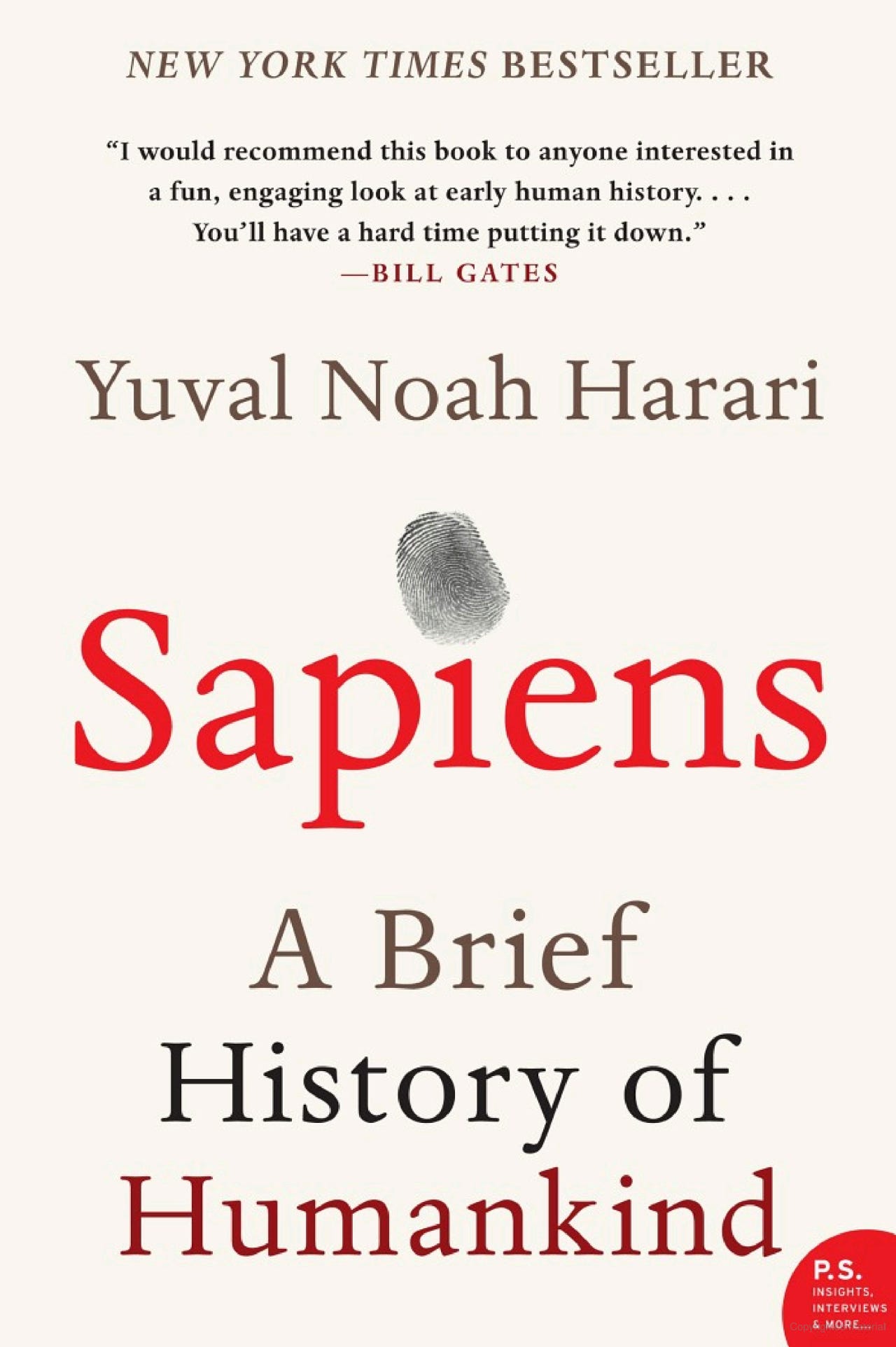
We like our origin stories well defined. The popular telling — the Israeli historian Yuval Noah Harari’s Sapiens is the bestselling version — locates a moment when archaic humans crossed a threshold and became modern, transformed by some neurological windfall in Africa. But a recent paper by anthropologist Huw Groucutt on Homo sapiens dispersal argues this says more about Homo sapiens’ neurological bias toward clean narratives than about the evidence we have.
This ‘revolution into modern’ frame has traceable historical roots. In the 1960s and 70s, the only deeply excavated record was in a western sliver of the Eurasian landmass called Europe. There, the transition from Neanderthal to Homo sapiens congregations did look abrupt. It was reasonable, given what was known at the time, to read this regional shift as a species-wide threshold — a sudden flowering of cognition and culture. But that reading was a misinterpretation. What Europe records is not a transformation but a replacement where one population arrived as another receded. The arc of change was migration, not metamorphosis.
That correction took hold, but the ‘revolution’ story, like the species, simply relocated. There would be a coastal revolution in southern Africa, a cognitive revolution in the Rift Valley, a technological revolution in the Levant. The plot survived even as the setting changed.
The deeper trouble lies with the word “modern” itself. It is a relic of mid-twentieth-century thinking that anchors humanity to an imagined ethnographic checklist: symbolic art, refined toolkits, complex burials, linguistic competence. These traits are taken to constitute a package, and the package is taken to arrive together. But the evidence keeps refusing this neatness. The traits show up in pulses across regions and disappear again. They appear in populations we have been trained to call “archaic.” They fail to coordinate the way the model demands, and as Groucutt says, provide just
“another way of separating ‘us’ and ‘them’.”
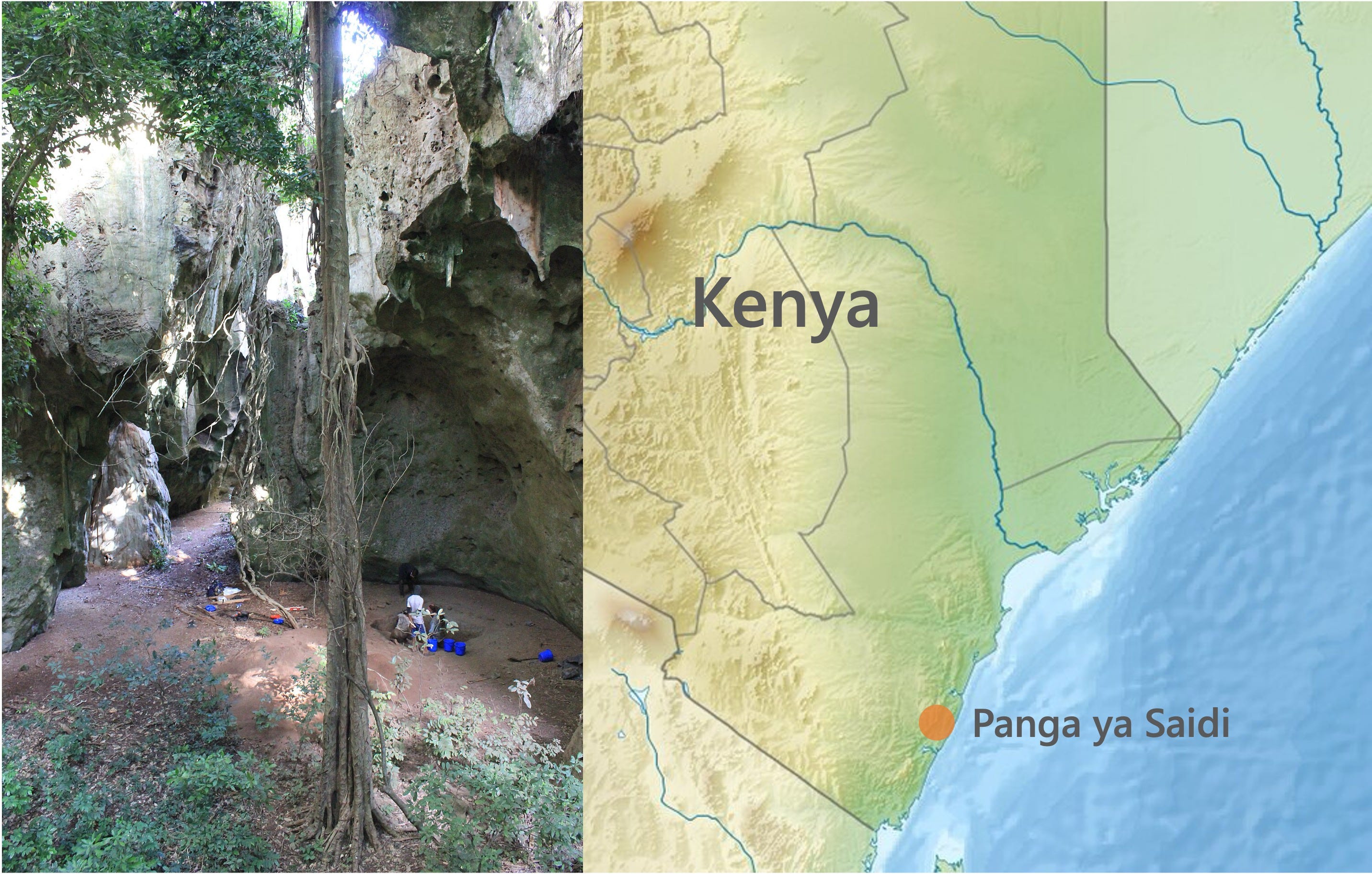
For example at Panga ya Saidi in coastal Kenya, excavators recovered the burial of a child known as Mtoto dated to around 78,000 years ago. It is among the oldest deliberate burials known from Africa, and the kind of behavior usually slotted under “modernity.” Yet there is no continent-wide adoption of similar mortuary practice that follows from it. Burial complexity at Panga ya Saidi appears, then thins, then reappears elsewhere on different terms. It looks less like the leading edge of a wave and more like a local response to local conditions.
A second example pulls in the opposite direction. The Iho Eleru skull, recovered in 1965 from a rock shelter in Nigeria, is roughly 13,000 years old — geologically yesterday — yet preserves features that morphologists have long called “archaic.” It refuses to sit in the bin its date implies. The bone is doing something the category cannot absorb.
The cost of the revolution model, then, is not that it tells a tidy story. It is that the tidiness encourages researchers to treat their categories as facts of nature rather than instruments of description. Evidence that does not fit the frame gets explained away or quietly set aside. When you stop asking when our ancestors became human and start asking how, across thousands of generations and a shifting climate, particular behaviors were assembled and reassembled in particular places, the data reads very differently.
This point is not new. In 2000, Sally McBrearty and Alison Brooks published a paper titled “The revolution that wasn’t,” arguing that the complex behaviors taken to define modernity in Europe had appeared in Africa tens of thousands of years earlier, and gradually rather than in a single burst. That correction is over twenty-five years old. The fact that revolution thinking has persisted despite it — and persisted most loudly in popular accounts that sell in the tens of millions — is itself worth taking seriously. Models, like fossils, accumulate where the conditions are right for preservation.
The trait-list at the heart of “modernity” is a fragile instrument in its own right. Many of the behaviors taken to mark our species are anchored to ethnographic data on recent hunter-gatherer societies, assumed to provide a baseline for what fully human cultural life looks like. Those datasets have well-known problems; when the archaeologist Robert Kelly examined a portion of Lewis Binford’s widely used hunter-gatherer compilation in 2021, he was able to confirm the accuracy of only one percent of the entries. The benchmark we have been measuring the deep past against is, in places, made of sand.
PATHS, NOT PIVOTS
For anyone who works with spatial data, the revolution model has a second problem. It ignores the terrain. A revolution, mapped, would look like an expanding circle radiating from a source — like a wildfire expanding from a single ignition point. Human dispersal looks nothing like that. It moves along corridors, hesitates at barriers, doubles back, fragments around resources. It is shaped by climate cycles that open and close routes on millennial timescales. The footprint is irregular because the ground is irregular.
Groucutt’s argument benefits from a concept that geographers and geomorphologists know well: equifinality. The same observed outcome can result from different processes. A bowl-shaped depression on a hillside can be carved by a glacier, scooped by a landslide, or eroded by a spring undercutting from below. The shape alone does not tell you which. Read the depression as a single signature of a single cause, and you will misjudge its history.
The same caution applies to the deep human past. A scatter of similar tool types across regions does not necessarily document a single dispersing population with a shared cognitive package. It may document several populations independently arriving at similar solutions to similar pressures. A flicker of symbolic behavior in two distant places does not imply continuous transmission between them. The archaeological record is dense with cases where the simplest explanation — one cause, one origin — turns out to be the wrong one.
A telling example of how revolution thinking distorts spatial evidence comes from a long-running argument about the Levantine sites occupied by Homo sapiens between roughly 130,000 and 75,000 years ago — Skhul, Qafzeh, and others. Did these represent a genuine out-of-Africa dispersal, or were they merely an extension of African ecology into Southwest Asia? In the latter view, our species was so tightly coupled to its native biome that early presence beyond Africa was a kind of optical illusion. One prominent researcher has argued that Israel is outside Africa “only by modern political convention.”
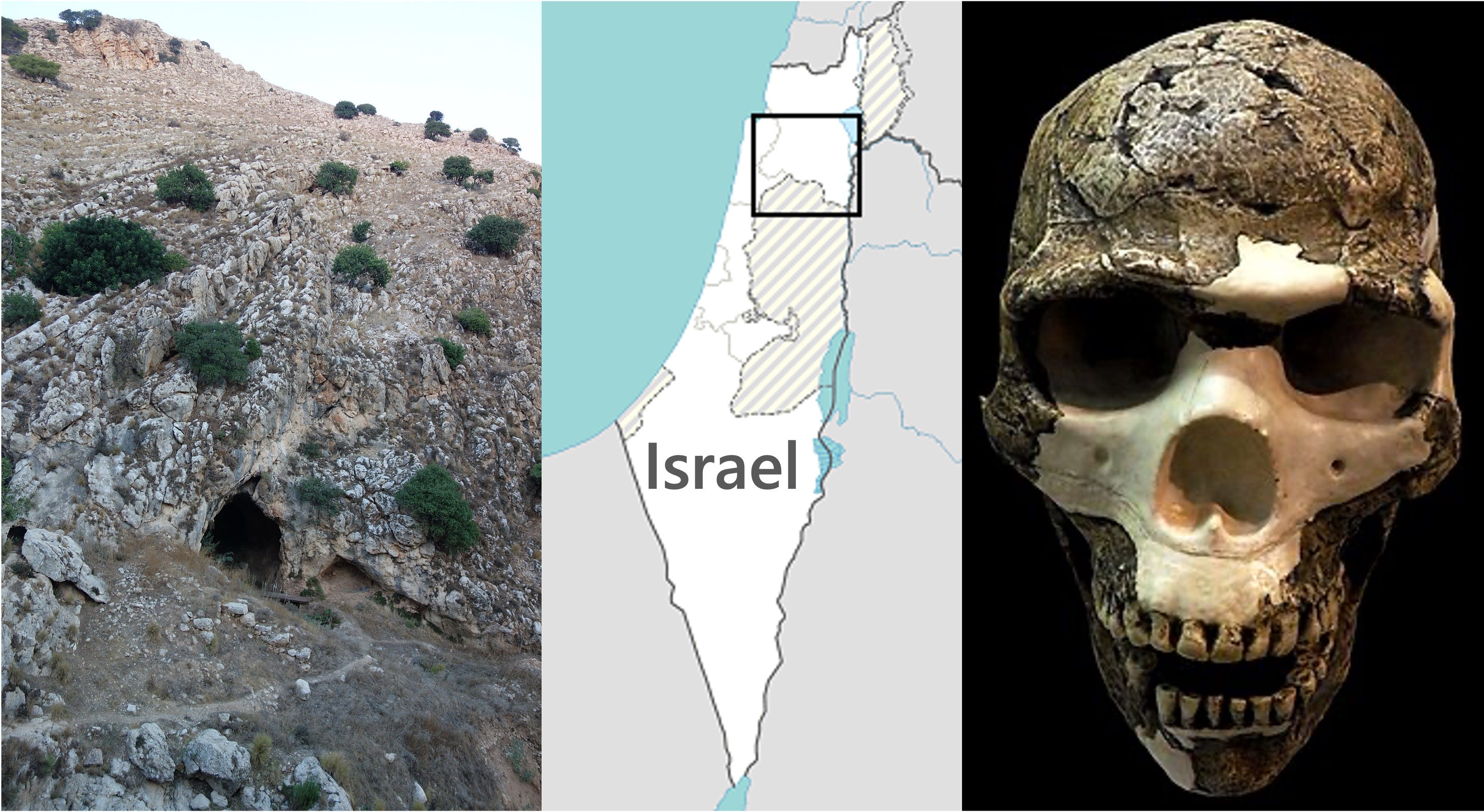
But the Levantine mammal fauna of this period is dominated by Palearctic species — deer, gazelle, boar — and has been since at least the Middle Pleistocene. The supposed African flourish at Qafzeh shrinks under examination to a few rare elements, some of them present in the region long before Homo sapiens arrived. “Africa grew” is what the revolution model looks like when biogeography becomes inconvenient. Rather than accept that early Homo sapiens dispersed beyond the continent before achieving full “modernity,” the frame extends the boundary of “Africa” to wherever the species happens to be. The terrain bends to match the model.
This is where genomic evidence becomes interesting and dangerous in roughly equal measure. Ancient DNA has transformed what can be reconstructed about population structure, and the resolution is genuinely impressive. But the analytic culture around that data has often defaulted to event-style narratives: a bottleneck here, a split there, a discrete mixture of pulses at a specific date. These tidy events, plotted on a tree, recover the satisfactions of the revolution at a different scale. They imply that the past has crisp joints, making
“claims for events which never actually occurred.”
The caution Groucutt raises is that population structure across the deep African past was probably continuous, regionally varied, and persistently interconnected — closer to a braided river than a branching tree. Apparent “events” in the genetic record may be artifacts of how the analysis is framed rather than discrete moments in time. Treating them as facts encourages claims of historical specificity the underlying signal cannot bear. Equifinality applies to genomes too. Different histories of structure and gene flow can produce overlapping statistical signatures.
What follows, methodologically, is a shift in what models are expected to do. Instead of identifying the moment, the route, or the founding population, the task becomes mapping a field of overlapping processes whose visibility varies by region, by preservation, and by the history of where archaeologists have chosen to dig. That is a less satisfying answer than a date and a place, but it’s closer to what the evidence supports.
MANY CLOCKS, MANY PASTS, MANY THREADS
The physicist Carlo Rovelli, in The Order of Time, makes an observation that time is not a universal river running at one rate everywhere. It is local and relational. This is not intuitive but matches reality. Atomic clocks at different elevations tick at measurably different rates because gravity dilates time. There is no master clock against which “now” is defined for the whole universe.
The revolution model assumes the opposite. It imagines a master clock striking modernity for the species at a particular moment — perhaps in East Africa, perhaps a hundred thousand years ago, perhaps fifty — after which a transformed humanity disperses outward. The image is compelling because it is simple. It is also, as a model of history, incongruent with reality. The record Groucutt reviews shows differently timed histories running in parallel across Africa, Arabia, Eurasia, and Sahul, with regional sequences that do not synchronize. There is no single instant at which the species, taken as a whole, became what it now is. There are only many local trajectories that we have, in retrospect, gathered under one name.
One sign that the revolution frame is still doing harm is that the three main streams of evidence — fossil morphology, archaeology, and ancient DNA — currently tell stories that do not align. The dispersal chronology reconstructed from genetic data alone is not the dispersal chronology of the lithic archaeology of northern Eurasia, and neither matches the fossil record of Asia and Sahul. These are not minor discrepancies at the margins. They are different shapes of history. The temptation, encountering this, is to declare one stream definitive and explain the others away. The harder course is to take the disagreement as evidence. What it is telling us is that the histories these methods recover are partial, regionally weighted, and pitched at different temporal resolutions. There is no master clock available to bring them into sync because there was never a master event for them to be synchronized to.
This is closer to what might be called emplacement than to revolution. Homo sapiens did not arrive in time as a finished product and then unfold into space. The species emerged through space — through specific landscapes, specific corridors, specific neighbors — and continued to be shaped by them long after any putative threshold. Cognition, technology, and social practice were not delivered together and then carried outward. They were assembled, lost, and reassembled in different combinations under different pressures. Whatever it is that we now point to as the human condition is the cumulative residue of that long, polycentric making. In Groucutt’s terms, they are
“polycentric and mosaic.”
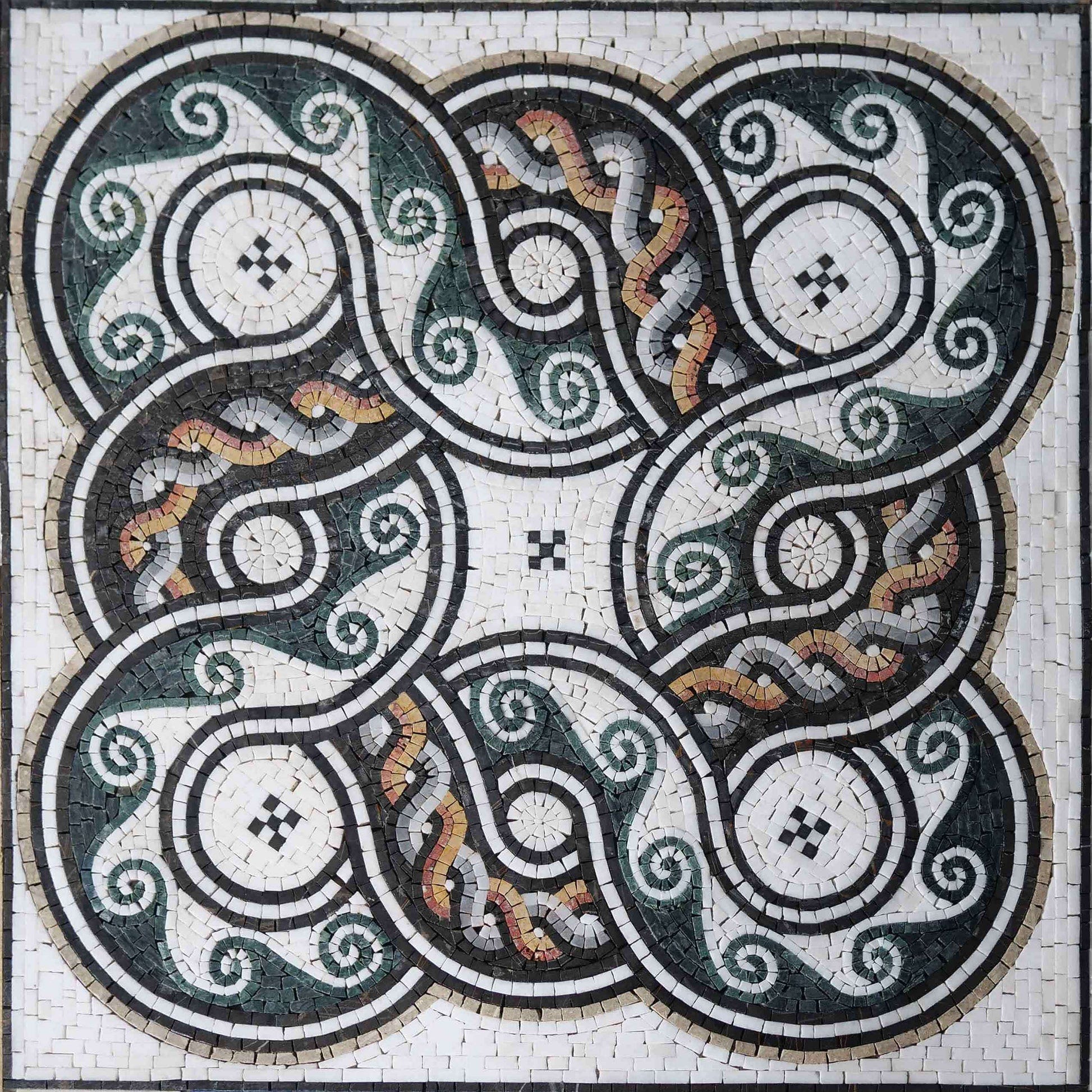
Letting go of the revolution story is uncomfortable because it removes the heroic frame that has organized so much storytelling about ourselves. There is no founding spark, no anointed lineage, no first true human. What remains is harder to compress into a sentence. It is also more honest, and more interesting. The work ahead — for archaeologists, geneticists, geographers, and anyone who builds models of the deep past — is to map the complexity of the terrain rather than identify a single point. To trace the connections that hold the picture together rather than the moment at which the picture was supposedly painted.
The mosaic is no runner-up to the revolution. It is the record itself — rough, regional, and real. We need only learn to read it.
References:
Groucutt, H. S. (2026). Revolution, modernity, and the dispersal of Homo sapiens beyond Africa. Quaternary Science Reviews.


