


Hello Interactors,
Watching all the transnational love at the Olympics has been inspiring. We’re all forced to think about nationalities, borders, ethnicities, and all the flavors of behavioral geography it entails. After all, these athletes are all there representing their so-called “homeland.” And in the case of Alysa Liu, her father’s escape from his. Between the 1989 Tiananmen Square massacre and the fall of the Berlin wall, “homeland” took on new meaning for many immigrants. This all took me back to that time and the start of my own journey at Microsoft at the dawn of a new global reality.

HOMELAND HATCHED HERE
With all the focus on Olympics and immigration recently, I’ve found myself reflecting on my days at Microsoft in the 90s. As the company was growing (really fast), teams were filling up with people recruited from around the world. There were new accents in meetings, new holidays to celebrate, and yummy new foods and funny new words being introduced. This thickening of transnational ties made Redmond feel as connected the rest of the world as the globalized software we were building. By 2000 users around the world could switch between over 60 languages in Windows and Office. In behavioral geography terms, working on the product and using the product made “here” feel more connected to “elsewhere.”
This influx of new talent was all enabled by the Immigration Act of 1990. Signed by George H. W. Bush, it increased and stabilized legal pathways for highly skilled immigrants. This continued with Clinton era decisions to expand H-1B visa allocations that fed the tech hiring boom. I took full advantage of this allotment recruiting and hiring interaction designers and user researchers from around the world.1
In the same decade the federal government expanded access to the United States, it also tightened security. Terrorism threats, especially after the 1993 World Trade Center bombing, spooked everyone. Despite this threat, there was more domestic initiated terrorism than outside foreign attacks. The decade saw deadly incidents like the Oklahoma City bombing in 1995 by radicalized by white supremacist anti-government terrorists, which killed 168 and injured hundreds, making it the deadliest terrorist attack in U.S. history before 9/11.

A year later, the Atlanta Olympic bombing and related bombings by anti-government Christian extremists caused multiple deaths and injuries. Clinic bombings and shootings by anti-abortion extremists began in 1994 with the Brookline clinic shootings and continued through the 1998 Birmingham clinic bombing. These inspired more arsons, bombings, and shootings tied to white supremacist, anti-abortion, and other extreme ideologies.
Still, haven been shocked by Islamist extremists in 1993 (and growing Islamic jihadist plots outside the U.S.) the federal government adopted new security language centered on protecting the “homeland” from outside incursions. In 1998, Clinton signed Presidential Decision Directive 62, titled “Protection Against Unconventional Threats to the Homeland and Americans Overseas,” a serious counterterrorism document whose title quietly normalized the term homeland inside executive governance.
But there was at least one critical voice. Steven Simon, Clinton’s senior director for counterterrorism on the National Security Council, didn’t think “Defense of the Homeland” belonged in a presidential directive.2
Simon’s retrospective argument is that “homeland” did more than name a policy, it brought a territorial logic of legitimacy that the American constitution had historically resisted. He recalls the phrase “Defense of the Homeland” felt “faintly illiberal, even un-American.” The United States historically grounded constitutional legitimacy in civic and legal abstractions (people, union, republic, human rights) rather than blood rights or rights to soil. Membership was to be mediated by institutions, employment, and law rather than ancestry.
“Homeland” serves as a powerful cue that suggests a mental model of ‘home’ and expands it to encompass a nation. This model is accompanied by a set of spatial inferences that evoke familiarity, appeal, and even an intuitive sense. However, it also creates a sense of a confined interior that can be breached by someone from outside.
This is rooted in place attachment that can be defined as an affective bond between people and places — an emotional tie that can anchor identity and responsibility. But attachment is not the same thing as ownership. Research on collective psychological ownership shows how groups can come to experience a territory as “ours.” This creates a sense of ownership that can be linked to a perceived determination right.
Here, the ingroup is entitled to decide what happens in that place while sometimes feeding a desire to exclude outsiders.3 When the word “homeland” was placed at the center of statecraft it primed public reasoning from attachment of place through care, stewardship, and shared fate toward property ownership through control, gatekeeping, and exclusion. It turns belonging into something closer to a property claim.
What makes the 1990s especially instructive from a geography perspective is that “access” itself was being administered through institutions that are intensely spatial: consulates, ports of entry, employer locations, housing markets, and the micro-geographies of office life. The H-1B expansions was not simply generosity, but a form of managed throughput in a system designed to meet labor demand. And it was paired with political assurances about enforcement and domestic worker protections.
Mid-decade legal reforms strengthened enforcement by authorities in significant ways. Mechanisms for faster removals and stricter interior enforcement reinforced the idea that the state could act more decisively within the national space.4 The federal government found ways to expand legal channels that served economic objectives while also building a governance style increasingly comfortable with interior control. “Homeland” helped supply the conceptual bridge that made that socioeconomic coexistence feel coherent.
It continues to encourage a politics of boundary maintenance that determines who counts as inside, what kinds of movement are legible as normal, and which bodies are perpetually “out of place.” If the defended object is a republic, the default language justification is legal and civic. If the defended object is a homeland, the language jurisdiction becomes territorial and affective. That shift changes what restrictions, surveillance practices, and membership tests become thinkable and tolerable over time.
HOMELAND’S HOHFELDIAN HARNESS
If “homeland” structures a place of belonging, then “rights” are the legal grammar that tells us what may be done in that place. The trouble is that “rights” are often treated as moral abstract objects floating above context. Legally, they are structured relations among people, institutions, and things. But “rights” can take on a variety of meanings.
Wesley Hohfeld, the Yale law professor who pioneered analytical jurisprudence in the early 20th century, argued that many legal disputes persist because the word “right” is used ambiguously.
He distinguished four basic “incidents” for rights: claim, privilege (liberty), power, and immunity. Each is paired with a position correlating to another party: duty, no-claim (no-right), liability, and disability. When the police pull you over for speeding you hold a privilege to drive at or below the speed limit (say, 40 mph). The state has no-right to demand you stop for going exactly 40 mph. But if you’re clocked at 50 mph, the officer enforces your no-right to exceed the limit which correlates to the state’s claim-right. You have a duty to comply by pulling over. If the officer then has power to issue a ticket, you face a liability to have your driving privilege altered (e.g., fined). But you also enjoy an immunity from arbitrary arrest without probable cause.
Let’s apply that to “homeland” security.
If a politician says we must “defend the homeland,” it can mean at least four different things legally:
Claim-Rights: Citizens can demand that the government protect them (e.g., from attacks). Officials have the duty to act — think TSA screening or border patrol.
Privileges: Federal Agents get freedoms to act without legal blocks, such as stopping and questioning people in so-called high-risk zones, while bystanders have no-right to interfere.
Powers: Federal Agencies hold authority to change your legal status. For example, they can label you a watchlist risk (e.g., you become a liability). This can then lead to loss of liberties like travel bans, detentions, or asset freezes.
Immunities: Federal Officials or programs shield themselves from lawsuits (via qualified immunity or classified data rules), effectively blocking citizens’ ability to sue.
Forget whether these are legitimate or illegitimate, Hohfeld’s point is they are different forms of rights — and each has distinct costs. Once “homeland” is the object, the system tends to grow powers and privileges (capacity for overt or covert operations), and to seek immunities (resistance to challenge), often at the expense of others’ claim-rights and liberties.
Rights are not only relational, but they are also often spatially conditional. The same person can move through zones of legality experiencing different practical rights. Consider border checkpoints, airports, perimeters of government buildings, protest cites, or regions declared “emergency” zones. Government institutions operationalize these spaces as “behavioral geographies” which determines who gets stopped, where scrutiny concentrates, and which movements count as suspicious.
The state looks past the abstract bearer of unalienable liberties and due process to see only a physical entity whose movements through space dissolve their Constitutional immunities into a series of observable, trackable traces. Those traces become inputs to enforcement. This is what makes surveillance so powerful. “Homeland” governance is especially trace-hungry because it imagines safety as a property of space that must be continuously maintained.
But these traces are behavioral cues and human behavior is never neutral. They are interpreted through normalized cultural and institutional schemas about who “belongs” in which places. Place attachment and territorial belonging can become gatekeeping mechanisms. Empirical work on homeland/place attachment links it to identity processes and self-categorization.5 Related work suggests that collective psychological ownership — “this place is ours” — can predict exclusionary attitudes toward immigrants and outsiders.6 In legal terms, those social attitudes can translate into pressure to expand state powers and narrow outsiders’ claim-rights.
A vocabulary rooted in a ‘republic’ tends to emphasize rights as universal claims against the state. This is where we get due process, equal protection, and rights to speech and assembly. A homeland vocabulary tends to emphasize rights as statused permissions tied to membership and territory. Here we find rights of citizens, rights at the border, rights in “emergencies”, and rights conditioned on “lawful presence.” The shift makes some restrictions feel like a kind of protecting of the home. Hence the unaffable phrase, “Get off my lawn.”
HOMELAND HIERARCHIES HUMBLED
If the “homeland” is framed as a place-of-belonging and rights are the grammar of that place, then the current crisis of American democracy boils down to a dispute over the nature of equality. This tension is best understood through the long-standing constitutional debate between anticlassification and antisubordination, which dates back to the Reconstruction era.7
Anticlassification, often called the “colorblind” or “status-blind” approach, holds that the state’s duty is simply to avoid explicit categories in its laws. Antisubordination, by contrast, insists that the law must actively dismantle structured group hierarchies and the “caste-like” systems they produce. When the state embraces a “homeland” logic, it leans heavily on anticlassification to mask a deeper reality of spatial subordination.
In what we might call the “Theater of Defense,” agencies like the Department of Homeland Security (DHS) and Immigration and Customs Enforcement (ICE) increasingly rely on anticlassification principles to justify aggressive interior crackdowns. They frame enforcement as a territorial necessity by protecting the sanctity of the soil itself. A workplace raid or roving patrol, in this view, does not target any specific group. Instead, it simply maintains the “integrity” of the homeland. This reflects what law professor Bradley Areheart and others have described as the “anticlassification turn,” where formal attempts to embody equality end up legitimizing structural inequality.8
Put differently, the state exercises a Hohfeldian Power to alter individuals’ legal status based on their geographic location or “lawful presence.” At the same time, it shields itself from legal challenge by insisting that the law applies equally to everyone who is “out of place.” This claim of territorial neutrality is a dangerous legal fiction. As scholars Solon Barocas and Andrew Selbst have shown in their work on algorithmic systems, attempts at neutral criteria often replicate entrenched biases.9
Triggers like “proximity to a border” or “behavioral traces” in a transit hub do not produce blind justice. They enable targeted scrutiny and the erosion of immunity for those whose identities fail to match the “belonging” model of the “homeland.” The state circumvents its Hohfeldian Disability, avoiding the creation of second-class statuses, by pretending to manage space rather than discriminate against persons.
This shift from a civic Republic to a territorial “homeland” is the primary driver of democratic backsliding. Political scientist Jacob Grumbach captured this dynamic in his 2022 paper, Laboratories of Democratic Backsliding.10 Analyzing 51 indicators of electoral democracy across U.S. states from 2000 to 2018, Grumbach developed the State Democracy Index. His findings reveal how American federalism has morphed from “laboratories of democracy” into sites of subnational authoritarianism.
States with low scores on the index — often under unified Republican control — have pioneered police powers that insulate partisan dominance. We see this in the rise of state-level immigration enforcement units, the criminalization of movement for marginalized groups, and the expansion of a “right to exclude.”
These states are not just enforcing the law. They are forging what Yale legal scholar Owen Fiss would recognize as a new caste system.11 By fixating on “defending” state soil against “infiltrators,” legislatures dismantle the public rights of the Reconstruction era — the right to participate in community life without indignity. Today’s backsliding policies transform the nation’s interior into a permanent enforcement zone. They reject the Enlightenment ideals of America, rooted in beliefs like liberty, equality, democracy, individual rights, and the rule of law.
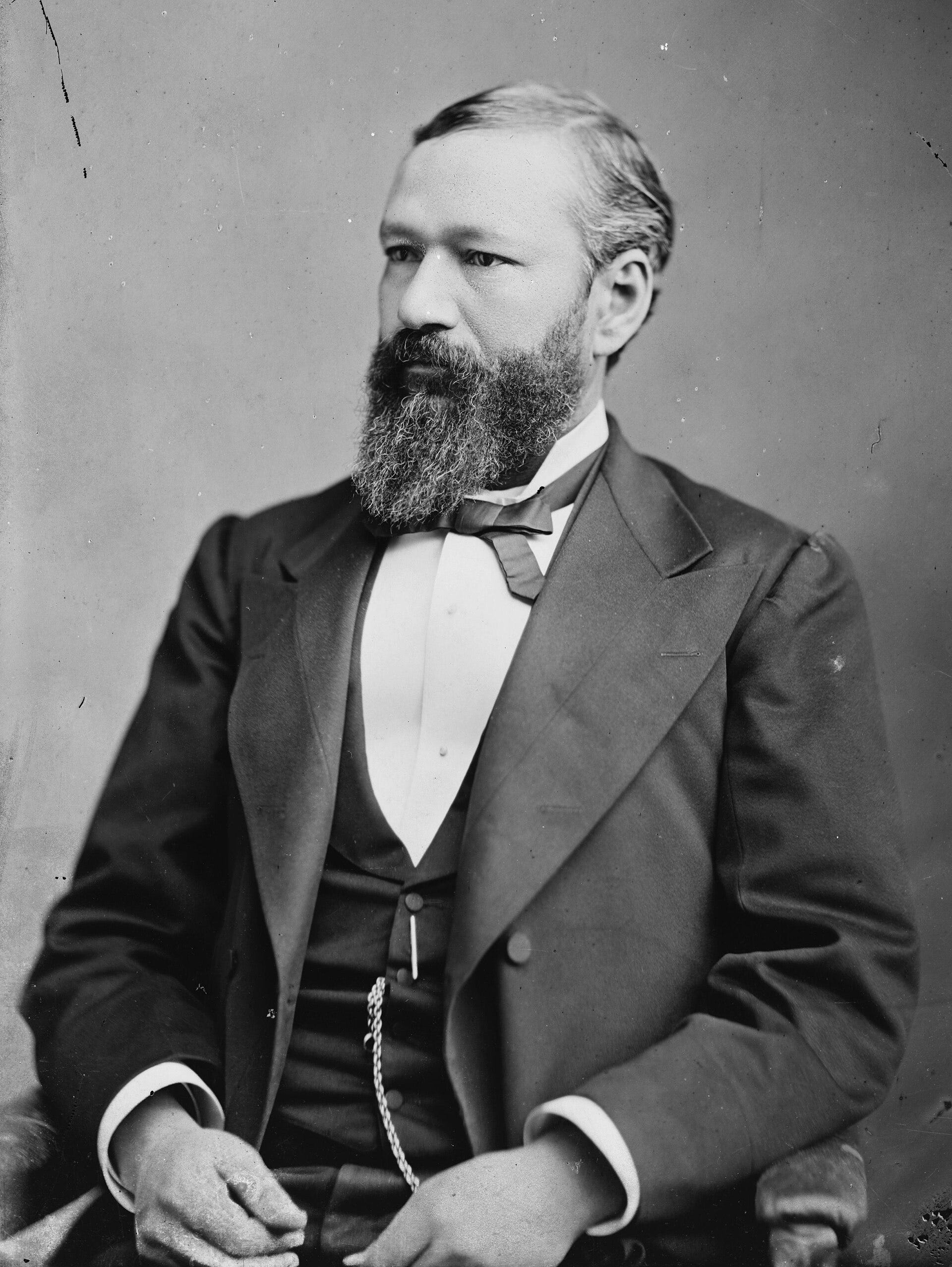
To fully understand Constitutional history, we best acknowledge that America’s universalist creedal definition wasn’t solely European. David Graeber and David Wengrow’s The Dawn of Everything shows how Enlightenment values of liberty and equality arose from intellectual exchanges with Indigenous North American thinkers.12 Kandiaronk, a Huron statesman, traveled to Europe in the late 17th century and debated French aristocrats. His critiques were published and circulated widely among European intellectuals, including Voltaire, Diderot, and Rousseau.
Graeber and Wengrow point out that before the widely popular publication of these dialogues in 1703, the concept of "Equality" as a primary political value was almost entirely absent from European philosophy. By the time Rousseau wrote his Discourse on the Origin and Basis of Inequality Among Men in 1754, it was the central question of the age.
Kandiaronk criticized European society’s subservience to kings and obsession with property. He contrasted it with the consensual governance and individual agency of the Haudenosaunee Confederacy embodied in their Great Law of Peace — a political order prioritizing the public right to exist without state-sanctioned indignity.
The writers of the U.S. Constitution codified a Republic of “unalienable rights,” synthesizing Indigenous/European-inspired liberty with Hohfeldian Disabilities that legally restrained the state from territorial monarchy. Backsliding erases this profound philosophical endeavor. Reclaiming the Republic means honoring the Indigenous critique that a nation’s legitimacy rests on its people’s freedom, not its fences.
We seem to be moving from governance by the governed to protecting an ingroup. In Hohfeldian terms, the state expands its privileges while shrinking the claim-rights of the vulnerable to move and exist safely. This leads to “spatial subordination,” managed through adiaphorization — a concept from social theorist Zygmunt Bauman’s 1989 Modernity and the Holocaust.
Bauman, a Polish-Jewish survivor who escaped the Nazis’ grip on his early life, drew “adiaphora” from the Greek for matters outside moral evaluation. Modern bureaucracies make horrific actions morally neutral by framing them as technical duties, enabling atrocities like the Holocaust without personal ethical torment.
As territorial belonging takes precedence, non-belongers are excluded from moral and legal obligations. They become “non-spaces” or “human waste” in the eyes of ICE and DHS. This betrays antisubordination, the “core and conscience” of America’s civil rights tradition, as Yale constitutional scholars Jack Balkin and Reva Siegel called it.13 A democracy can’t endure if it permanently relegates any group to legal impossibility.
In the “homeland”, immigrants may live, work, and raise families for decades, yet remain mere “traces” to expunge. Weaponized place attachment turns affective bonds into property claims. This empowers the state to “cleanse” those deemed to be “out of place.” Rights become statused permissions, not universal ideals. If immunity from search depends on territorial status, the Republic of laws has yielded to a Heimat — a term the Nazis’ usurped for their blood-and-soil homeland…that they then bloodied and soiled.
Reversing this demands confronting the linguistic and legal architecture that rendered it conceivable. It’s time to rethink the “homeland” frame and its anticlassification crutch. A truer and fairer Republic would commit to antisubordination and the state would be disabled from wielding space for hierarchy. A person’s immunity from arbitrary power should be closer to an inalienable right to be “secure in one’s person” that holds firm beyond checkpoints or workplace doors…or your front door.
Steven Simon was right to feel uneasy with Clinton’s wording. “Homeland” planted a seed that sprouted into hedgerows of exceptional powers and curtailed liberties. Are we going to cling to a “homeland” secured by fear and exclusion, forever unstable, or finally become a Republic revered for securing universal law and rights? As long as our rights remain geographically conditional, we all dwell in liability. Reclaiming the Republic, and our freedoms within it, may require transforming the Constitution from a Hohfeldian map of perimeters into a boundless plane of human dignity it aspires to be.
Bush, G. H. W. (1990, November 29). Statement on signing the Immigration Act of 1990. The American Presidency Project. UCSB.
Simon, S. (2026, February 19). How ‘homeland’ put America on the path to illiberalism. Financial Times.
Nijs, T., Martinovic, B., & Verkuyten, M. (2024). The two routes of collective psychological ownership: Rights and responsibilities explain intentions to exclude outsiders and engage in stewardship behavior. Personality and Social Psychology Bulletin.
Legal Information Institute. (n.d.). Illegal Immigration Reform and Immigrant Responsibility Act of 1996. Cornell Law School.
Skitka, L. J., Hanson, B. E., & Wisneski, D. C. (2013). Exploring attachment to the “homeland” and its association with willingness to use force and support for interpersonal violence in its defense. Journal of Experimental Social Psychology.
Nijs, T., Martinović, B., & Verkuyten, M. (2024). Are we more welcoming as neighbors or as citizens? Collective psychological ownership of neighborhood, city, and country. Journal of Environmental Psychology, 95.
Balkin, J. M., & Siegel, R. B. (2003). The American civil rights tradition: Anticlassification or antisubordination? University of Miami Law Review
Areheart, B. A. (2006). The anticlassification turn in the law of politics. University of Virginia Law Review.
Barocas, S., & Selbst, A. D. (2016). Big data’s disparate impact. California Law Review.
Grumbach, J. M. (2022). Laboratories of democratic backsliding. American Political Science Review
Fiss, O. (2004). The law as it could be. New York University Press.
Graeber, D., & Wengrow, D. (2021). The dawn of everything: A new history of humanity. Farrar, Straus and Giroux.
(7)


